
How to Control Negative Thoughts: Simple Ways to Build a Positive Mind
Oct 7, 2026 · 6 min read · 119 views
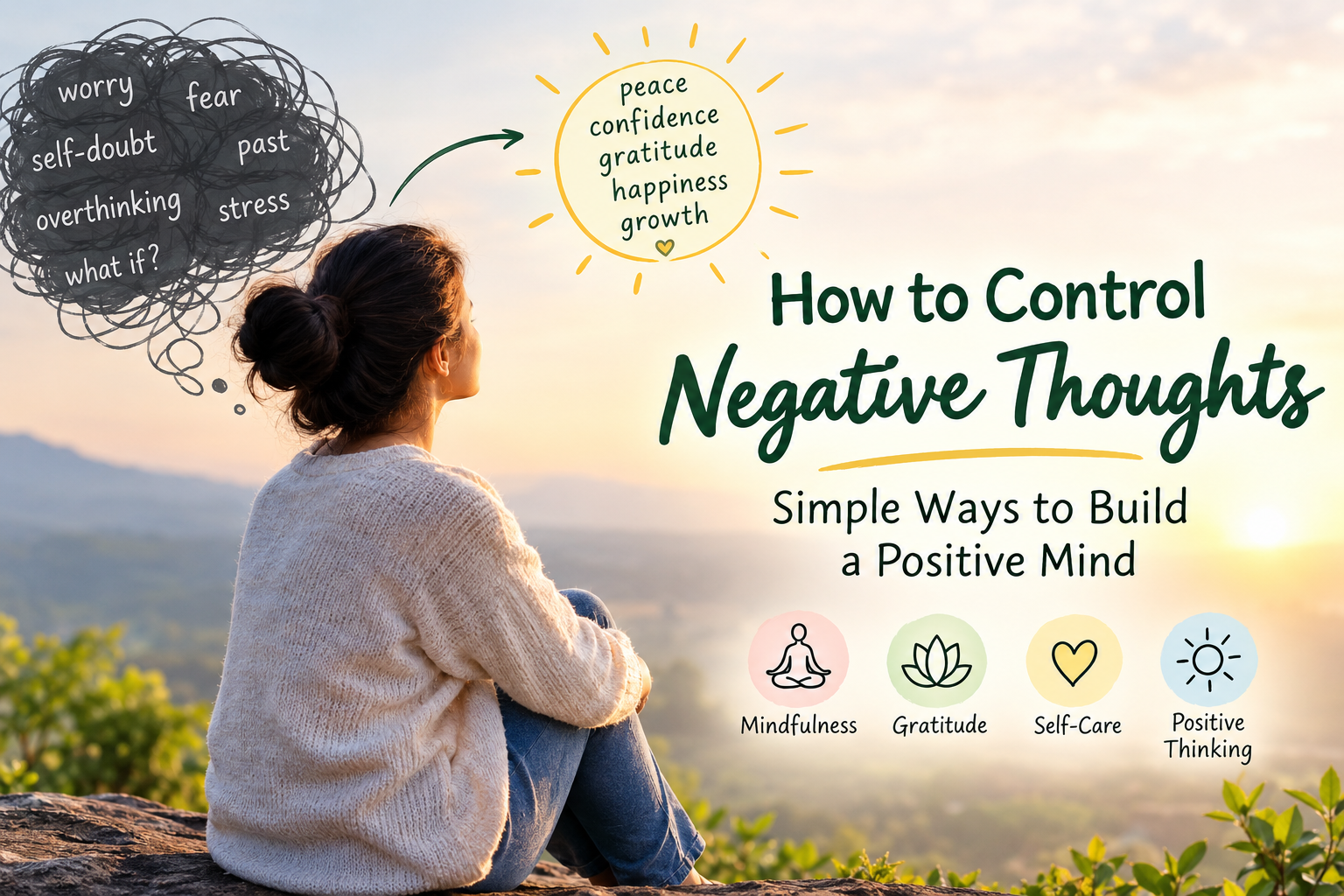
Negative thoughts are a natural part of life. Everyone experiences fear, self-doubt, worry, anger, or thoughts about past mistakes from time to time. However, when negative thinking becomes frequent, it can affect our peace of mind, confidence, relationships, and daily life.
The good news is that negative thoughts can be managed. We may not be able to control every thought that enters our mind, but we can learn how to respond to those thoughts in a healthier and more positive way.
What Are Negative Thoughts?
Negative thoughts are thoughts that make us feel worried, hopeless, afraid, guilty, or less confident. They often focus on problems, failures, fears, or things that might go wrong.
For example:
- “I am not good enough.”
- “Something bad will happen.”
- “I will never succeed.”
- “Everyone is better than me.”
- “I always make mistakes.”
Such thoughts may feel real, but a thought is not always a fact.
Why Do We Have Negative Thoughts?
Negative thinking can develop because of many reasons, including:
- Stress and pressure
- Fear of failure
- Past experiences
- Low self-confidence
- Comparing ourselves with others
- Overthinking
- Difficult relationships
- Lack of sleep or rest
- Constant exposure to negative information
Understanding the reason behind negative thinking can help us manage it better.
1. Observe Your Thoughts
The first step is to notice your thoughts instead of immediately believing them.
When a negative thought appears, pause and ask yourself:
“Is this thought really true?”
Try to observe the thought without judging yourself. You can remind yourself, “This is only a thought. I do not have to believe everything my mind says.”
2. Replace Negative Thoughts With Positive Ones
Instead of repeating negative statements, try to replace them with realistic and encouraging thoughts.
For example:
Negative: “I cannot do this.”
Positive: “This is difficult, but I can learn and improve.”
Negative: “I always fail.”
Positive: “I made a mistake, but I can learn from it.”
Positive thinking does not mean ignoring problems. It means looking at challenges with hope and a practical mindset.
3. Stop Overthinking
Overthinking can make a small problem feel much bigger.
When you find yourself thinking about the same problem again and again, take a break. Focus your attention on something useful, such as reading, walking, praying, cleaning, writing, or spending time with family.
Ask yourself:
“Can I do something about this problem right now?”
If the answer is yes, take one small step. If the answer is no, try to let the thought go for the moment.
4. Practice Meditation and Prayer
Meditation and prayer can help calm the mind and create inner peace.
Spend a few quiet minutes every day focusing on your breathing, a positive thought, mantra, or prayer. Spiritual practices can help us develop patience, faith, and emotional strength.
For those who follow a spiritual path, remembering God and having faith in divine timing can provide comfort during difficult moments.
5. Practice Gratitude
Gratitude helps shift our attention from what is missing to what we already have.
Every day, think of three things you are grateful for.
They can be simple things such as:
- Family
- Good health
- Food and shelter
- A peaceful moment
- Support from someone you love
- A beautiful sunrise
- Another opportunity to try again
A grateful mind gradually learns to notice the positive side of life.
6. Avoid Constant Comparison
Comparing your life with someone else's can create unnecessary negative thoughts.
Remember that every person has a different journey. Social media often shows only the best moments of someone's life, not their struggles.
Instead of asking, “Why am I not like them?”, ask:
“How can I become a better version of myself?”
Your progress matters more than someone else's timeline.
7. Take Care of Your Body
Mental and physical well-being are closely connected.
Simple habits such as getting enough sleep, eating nutritious food, drinking enough water, exercising, and spending time outdoors can support overall well-being.
Even a short daily walk can give your mind a refreshing break.
8. Talk to Someone You Trust
You do not always have to deal with difficult thoughts alone.
Talking to a trusted family member, friend, teacher, or professional can help you see a situation from a different perspective.
Sharing your feelings is not a sign of weakness. Sometimes, simply expressing what is in your mind can bring relief.
9. Focus on the Present Moment
Many negative thoughts are connected to the past or the future.
We may regret something that already happened or worry about something that has not happened yet.
Try bringing your attention back to the present moment.
Ask yourself:
“What can I do today that will make my life a little better?”
Focus on today's small actions instead of worrying about everything at once.
10. Give Yourself Time
Changing your thinking habits does not happen overnight.
Some days will be positive, while other days may feel difficult. Do not criticize yourself for having negative thoughts.
The goal is not to have a mind that never thinks negatively. The goal is to learn how to handle negative thoughts without allowing them to control your life.
The Power of a Calm Mind
A peaceful mind does not mean that life has no problems. It means learning how to face problems without losing hope.
When negative thoughts appear, pause, breathe, observe them, and choose a healthier response. With regular practice, patience, self-awareness, and faith, your mind can become stronger and calmer.
Final Thoughts
Negative thoughts are a part of being human, but they do not have to define who we are. We can learn to question negative thinking, focus on the present, practice gratitude, spend time with positive people, and develop spiritual and healthy daily habits.
Remember: You cannot always control the thoughts that enter your mind, but you can learn to control the thoughts you choose to hold onto.
Take one positive step today. Your mind deserves peace, patience, and kindness.
Frequently Asked Questions (FAQ)
Can negative thoughts be completely stopped?
It is not realistic to stop every negative thought. However, you can learn to recognize, question, and manage negative thoughts so they have less control over your emotions and actions.
How can I stop overthinking?
Try focusing on the present moment, writing your concerns down, taking a walk, practicing deep breathing, or doing one small useful activity instead of repeatedly thinking about the same problem.
Does positive thinking really help?
Positive and realistic thinking can help you approach challenges with greater hope and confidence. It does not mean ignoring problems; it means responding to them in a healthier way.
Can meditation help with negative thoughts?
Regular meditation may help improve awareness of thoughts and encourage a calmer response to stress. Even a few quiet minutes each day can be a useful practice.
When should I seek professional help?
If negative thoughts are persistent, overwhelming, or significantly affecting your daily life, sleep, relationships, or ability to function, consider speaking with a qualified mental-health professional.