What is Navratri? – Complete Information About Navratri
Oct 2, 2026 · 5 min read · 169 views
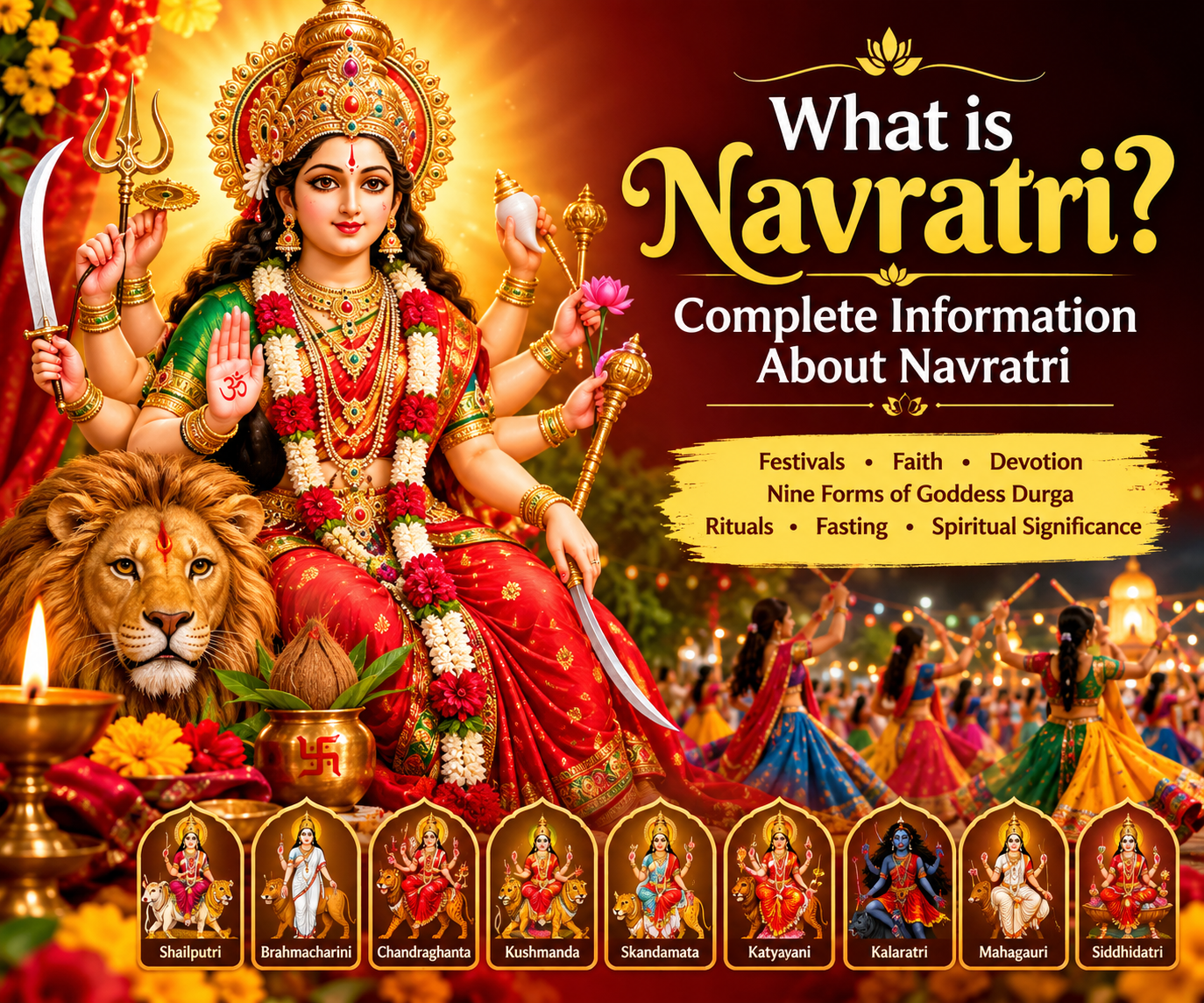
Navratri is one of the most important and spiritually significant Hindu festivals celebrated in India and by Hindu communities around the world. The word Navratri comes from two Sanskrit words: “Nav” meaning nine and “Ratri” meaning nights. Thus, Navratri literally means “nine nights.”
During these nine nights and ten days, devotees worship Goddess Durga and her nine forms, known as Navadurga. The festival represents the victory of good over evil, devotion over negativity, and divine power over darkness.
Why is Navratri Celebrated?
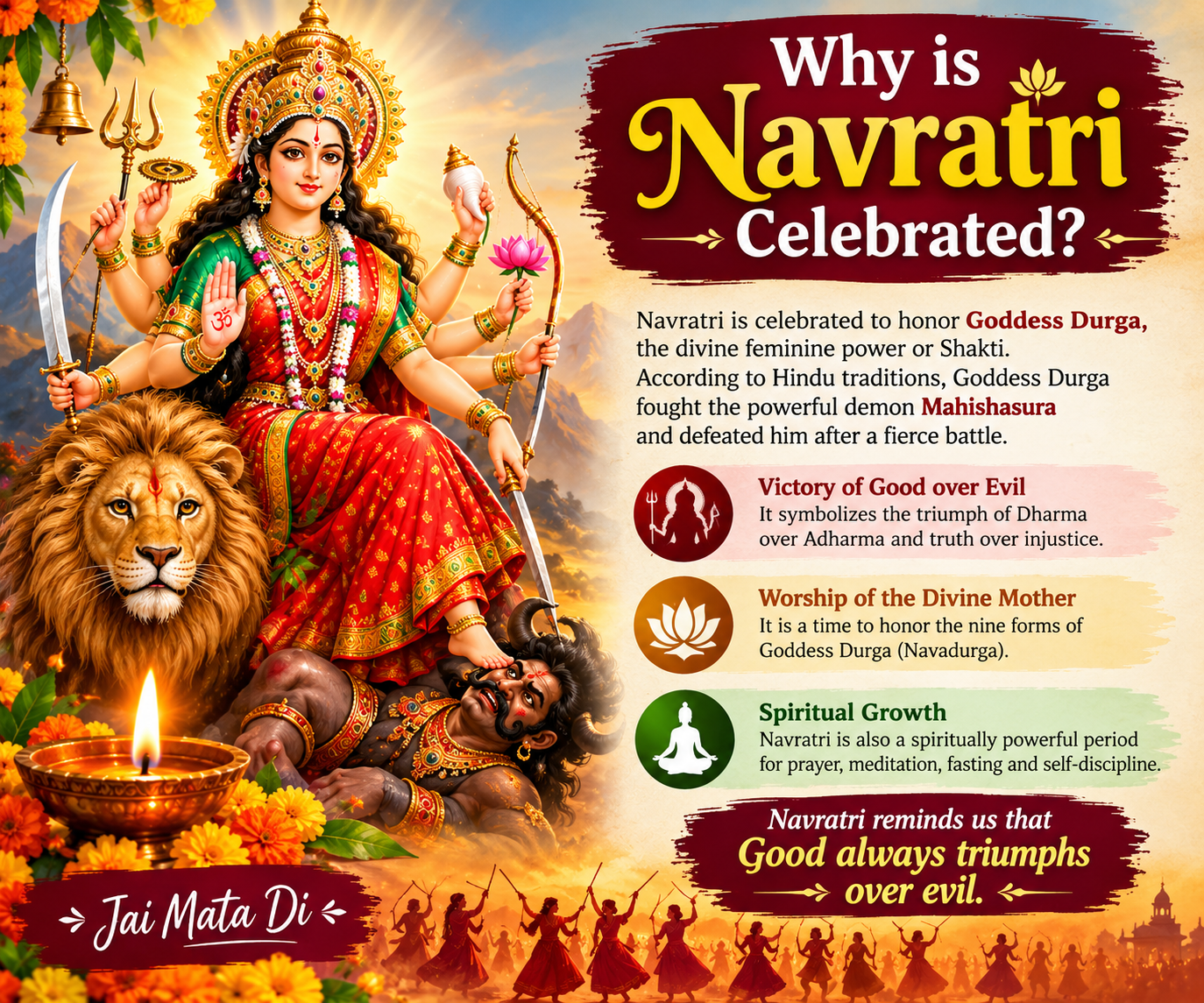
Navratri is celebrated to honor Goddess Durga, the divine feminine power or Shakti. According to Hindu traditions, Goddess Durga fought the powerful demon Mahishasura and defeated him after a fierce battle.
The victory of Goddess Durga over Mahishasura symbolizes the triumph of Dharma over Adharma, good over evil, and truth over injustice.
Navratri is also considered a spiritually powerful period for prayer, meditation, fasting, devotion, and self-discipline.
The Nine Forms of Goddess Durga
During Navratri, devotees traditionally worship one form of Goddess Durga on each of the nine days.
1. Maa Shailputri
Maa Shailputri is worshipped on the first day of Navratri. She is considered the daughter of the Himalayas. Devotees pray to her for strength, peace, and stability.
2. Maa Brahmacharini
The second day is dedicated to Maa Brahmacharini. She represents devotion, penance, determination, and spiritual discipline.
3. Maa Chandraghanta
Maa Chandraghanta is worshipped on the third day. She symbolizes courage, peace, and protection from negative forces.
4. Maa Kushmanda
The fourth day is dedicated to Maa Kushmanda. She is traditionally associated with the creation of the universe and divine energy.
5. Maa Skandamata
Maa Skandamata is worshipped on the fifth day. She is the mother of Lord Kartikeya, also known as Skanda. She represents motherhood, compassion, and protection.
6. Maa Katyayani
The sixth day is dedicated to Maa Katyayani. She is associated with courage, strength, and the destruction of negative forces.
7. Maa Kalaratri
Maa Kalaratri is worshipped on the seventh day. She represents powerful divine energy and is believed to protect devotees from fear and negativity.
8. Maa Mahagauri
The eighth day is dedicated to Maa Mahagauri. She symbolizes purity, peace, compassion, and spiritual transformation.
9. Maa Siddhidatri
Maa Siddhidatri is worshipped on the ninth day. She is associated with spiritual wisdom, divine blessings, and the attainment of Siddhis.
How is Navratri Celebrated?
Navratri is celebrated in different ways across different parts of India. Devotees may observe fasting, perform Durga Puja, visit temples, chant mantras, participate in devotional programs, and perform traditional dances.
In Gujarat and Maharashtra, Garba and Dandiya are popular during Navratri. In West Bengal, the festival is celebrated on a grand scale as Durga Puja. In several northern Indian regions, devotees observe fasting and perform special prayers dedicated to Goddess Durga.
The final days of Navratri are often marked by special pujas, Kanya Puja, and other religious rituals according to regional traditions.
Navratri Fasting
Many devotees observe a fast during Navratri as an expression of devotion and self-discipline. Some people fast for all nine days, while others observe fasting on selected days.
Common fasting foods may include fruits, milk, nuts, potatoes, sabudana, and other foods permitted according to individual traditions.
Fasting practices vary by family, region, and personal beliefs. Devotees should follow practices that are appropriate for their health and circumstances.
Spiritual Significance of Navratri
Navratri is not only a religious festival but also a period of inner purification and spiritual reflection.
The nine nights can be seen as an opportunity to overcome negative qualities such as anger, jealousy, greed, fear, and hatred. Through prayer, meditation, devotion, and self-control, devotees seek to develop positive qualities such as compassion, courage, patience, faith, and wisdom.
The worship of the Divine Mother reminds devotees of the importance of Shakti – divine feminine energy in Hindu philosophy.
Navratri and the Message of Good Over Evil
One of the central messages of Navratri is that good ultimately triumphs over evil.
The story of Goddess Durga and Mahishasura teaches devotees about courage, righteousness, faith, and the power of divine energy. It encourages people to face difficulties with determination and to follow the path of Dharma.
What Can We Do During Navratri?
During Navratri, devotees can:
- Worship Goddess Durga with devotion.
- Visit a Durga or Devi temple.
- Chant Durga mantras.
- Read or listen to Durga Saptashati according to one's tradition.
- Observe fasting if suitable.
- Practice meditation and prayer.
- Participate in Garba and Dandiya celebrations.
- Help people in need and perform acts of kindness.
- Maintain positive thoughts and avoid unnecessary negativity.
Conclusion
Navratri is a beautiful Hindu festival dedicated to Goddess Durga and the divine power of Shakti. The nine nights of Navratri provide an opportunity for devotees to strengthen their faith, practice self-discipline, seek divine blessings, and reflect on the deeper meaning of life.
The festival reminds us that Dharma, truth, courage, and goodness can overcome darkness and negativity. By celebrating Navratri with devotion and understanding, devotees can make these nine nights a meaningful spiritual journey.
May Maa Durga bless everyone with strength, peace, happiness, prosperity, and wisdom. Jai Mata Di! 🙏🌺
Frequently Asked Questions (FAQ)
What does Navratri mean?
Navratri means nine nights. It is a Hindu festival during which devotees worship Goddess Durga and her nine forms.
Why do Hindus celebrate Navratri?
Navratri is celebrated to worship Goddess Durga and symbolize the victory of good over evil. It is also a period of devotion, fasting, prayer, and spiritual discipline.
What are the nine forms of Goddess Durga?
The nine forms are Shailputri, Brahmacharini, Chandraghanta, Kushmanda, Skandamata, Katyayani, Kalaratri, Mahagauri, and Siddhidatri.
What is the spiritual significance of Navratri?
Navratri represents spiritual purification, self-discipline, devotion, and the victory of positive divine qualities over negativity.
Is fasting compulsory during Navratri?
No. Fasting is a personal religious practice and traditions differ among families and regions. Devotees may observe fasting according to their beliefs and circumstances.
#Navratri #NavratriFestival #GoddessDurga #Navadurga #DurgaPuja #SanatanDharma #HinduFestival #MaaDurga #Shakti #Spirituality #Hinduism #NavratriCelebration
More in Sanatan Dharma
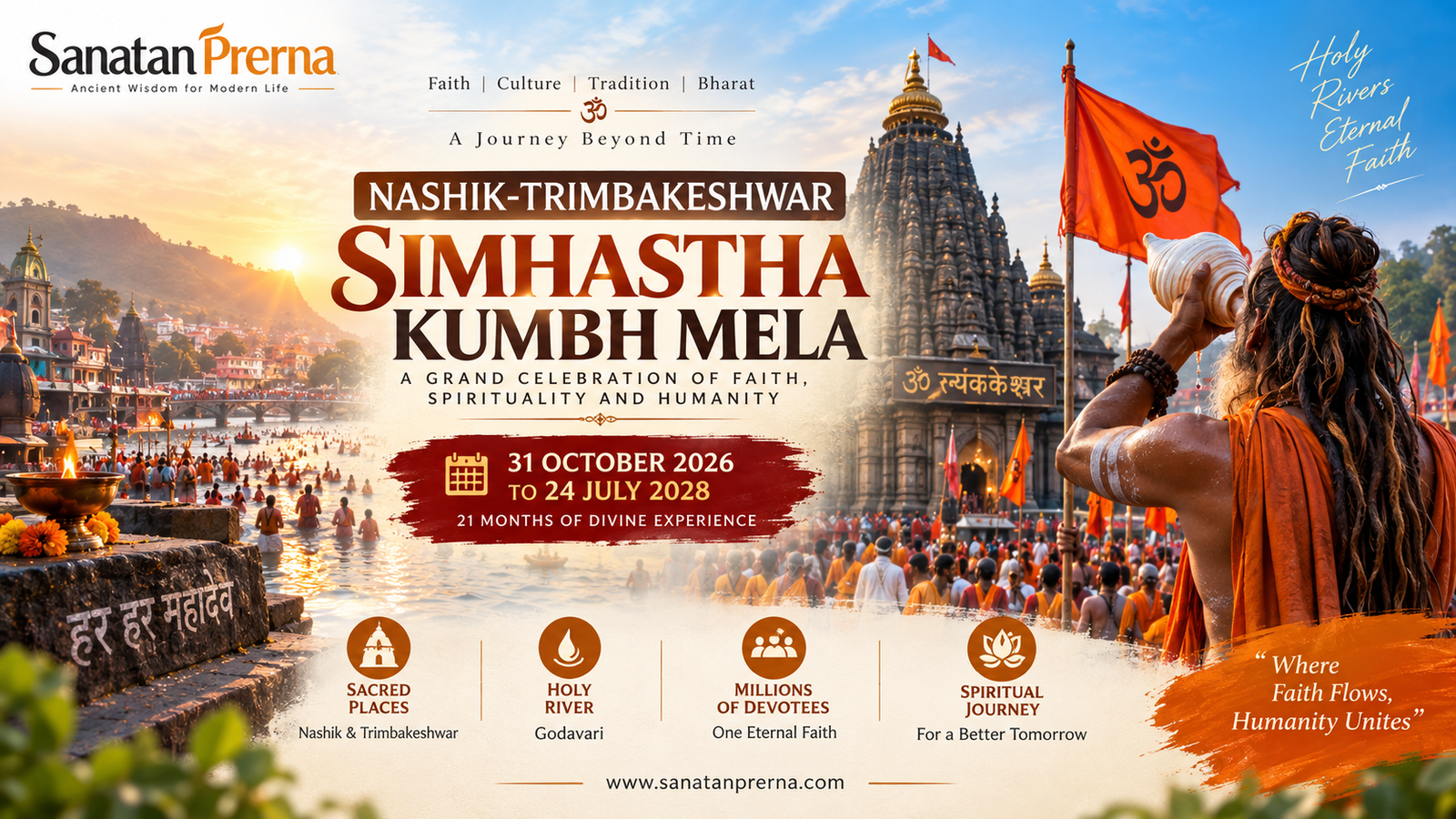
Nashik-Trimbakeshwar Simhastha Kumbh Mela 2026-28: Dates, Amrit Snan and Complete Details
श्रीकृष्णाने सांगितलेले कर्माचे महत्त्व – जीवन जगण्याचा अनमोल संदेश
