
📖भगवद्गीता अध्याय :१२ — भक्तियोग(Bhakti Yoga: The Path of Devotion)
Oct 5, 2026 · 4 min read · 140 views
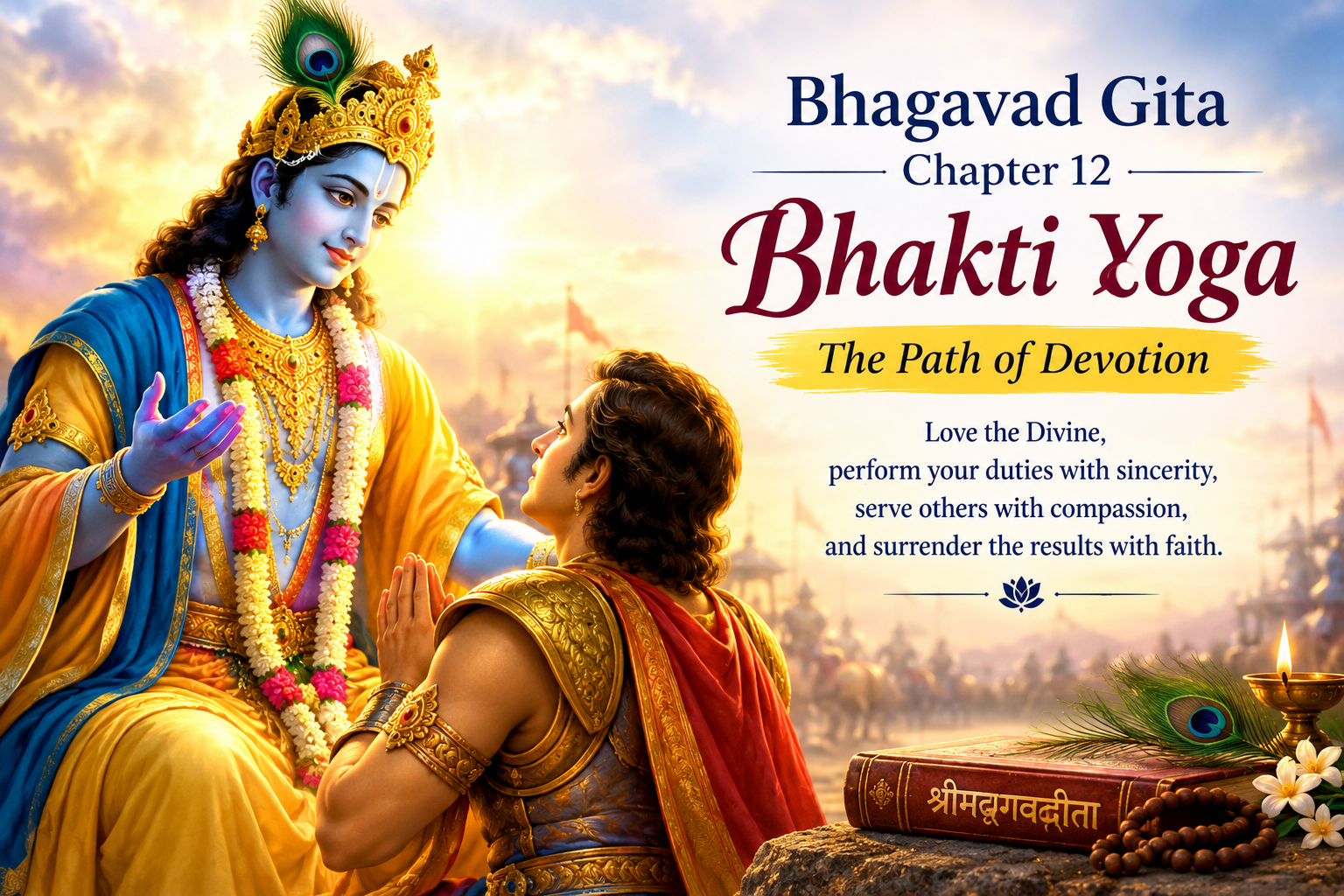
Bhagavad Gita Chapter 12, known as Bhakti Yoga, is one of the most beautiful chapters of the Bhagavad Gita. It explains the importance of devotion, faith, surrender, and love for the Divine.
In this chapter, Arjuna asks Lord Krishna an important question: Who is better—the devotee who worships the personal form of God or the one who meditates upon the formless, unmanifest Divine?
Lord Krishna explains the value of both paths but emphasizes that sincere devotion to the Divine is a natural and accessible spiritual path for most people.
What Is Bhakti Yoga?
The word Bhakti means devotion, love, faith, and surrender, while Yoga means union.
Therefore, Bhakti Yoga means the path of attaining spiritual connection with God through sincere devotion and love.
Bhakti is not limited to rituals or temple worship. True devotion is reflected in a person's thoughts, actions, behavior, compassion, humility, and faith.
Arjuna’s Question About the Best Path
At the beginning of Chapter 12, Arjuna asks Krishna about two types of spiritual seekers:
- Those who worship and surrender to the personal form of God.
- Those who meditate upon the eternal, unmanifest, and formless Divine.
Krishna explains that both can lead toward spiritual realization. However, the path of devotion and surrender is easier for ordinary people to follow.
The Power of Devotion
Lord Krishna teaches that a person who constantly remembers Him with faith and devotion is dear to Him.
A devotee does not need extraordinary abilities to practice Bhakti Yoga. Sincere love, faith, remembrance, and surrender are more important.
Even simple acts performed with devotion can become spiritual practices.
Steps Toward Spiritual Practice
Krishna gives practical guidance to those who want to follow the path of devotion.
If a person cannot constantly focus the mind on God, they should practice remembering Him regularly.
If constant meditation is difficult, one can perform actions for the sake of God.
If even this is difficult, a person can perform ordinary duties while gradually developing detachment from the fruits of actions.
This makes Bhakti Yoga accessible to people living ordinary family and working lives.
Qualities of a Dear Devotee
One of the most important sections of Chapter 12 describes the qualities of a devotee who is dear to Lord Krishna.
A true devotee tries to be:
- Free from hatred
- Compassionate toward all beings
- Humble
- Forgiving
- Peaceful
- Self-controlled
- Free from excessive ego
- Content with what is received
- Steady in devotion
- Friendly toward all
- Free from unnecessary fear and anger
These qualities show that true devotion is not only about worship—it is about transforming one's character.
Bhakti Yoga in Daily Life
Bhakti Yoga can easily become part of everyday life.
A person can practice devotion by:
- Starting the day with prayer
- Chanting God's name
- Reading the Bhagavad Gita
- Helping people selflessly
- Speaking truthfully
- Showing compassion toward animals and nature
- Performing family responsibilities sincerely
- Remembering God during difficult situations
- Offering the results of actions to God
In this way, ordinary life itself can become a spiritual journey.
The Importance of Surrender
Surrender is an important principle of Bhakti Yoga.
Surrender does not mean becoming weak or avoiding responsibilities. It means doing one's best while accepting that the final result is not completely under one's control.
This attitude can reduce unnecessary worry and help develop inner peace.
Why Is Bhakti Yoga Important Today?
Modern life is often filled with stress, competition, expectations, and uncertainty. Bhakti Yoga provides a simple spiritual approach that can help people develop faith and emotional strength.
A person does not have to leave family life or society to practice Bhakti Yoga. Devotion can be practiced while working, raising children, caring for parents, or fulfilling everyday responsibilities.
The important thing is to maintain sincerity and remembrance of the Divine.
Main Lessons from Chapter 12
Bhagavad Gita Chapter 12 teaches several timeless lessons:
1. Devotion is a powerful spiritual path.
2. Faith and surrender can bring inner peace.
3. God values sincere devotion rather than external show.
4. Compassion and humility are important qualities of a devotee.
5. We should perform our duties sincerely.
6. We should avoid excessive attachment to the results of our actions.
7. True spirituality transforms our behavior and character.
Conclusion
Bhagavad Gita Chapter 12 – Bhakti Yoga teaches the beautiful path of love, devotion, faith, and surrender.
Lord Krishna explains that devotion is not simply about rituals or prayers. True Bhakti means remembering God, performing one's duties sincerely, serving others, remaining compassionate, controlling the ego, and accepting life's circumstances with faith.
The message of Bhakti Yoga is simple and timeless:
Love the Divine, perform your duties with sincerity, serve others with compassion, and surrender the results with faith.
When devotion becomes a part of everyday life, the heart gradually becomes peaceful, humble, and spiritually stronger.
🙏 May Lord Krishna bless every devotee with faith, peace, wisdom, and devotion.
More in Bhagavad Gita

What is Bhagavad Gita? – The Complete Guide to Bhagavad Gita

📖 भगवद्गीताअध्याय: १ — अर्जुनविषादयोग (Arjuna Vishada Yoga)
