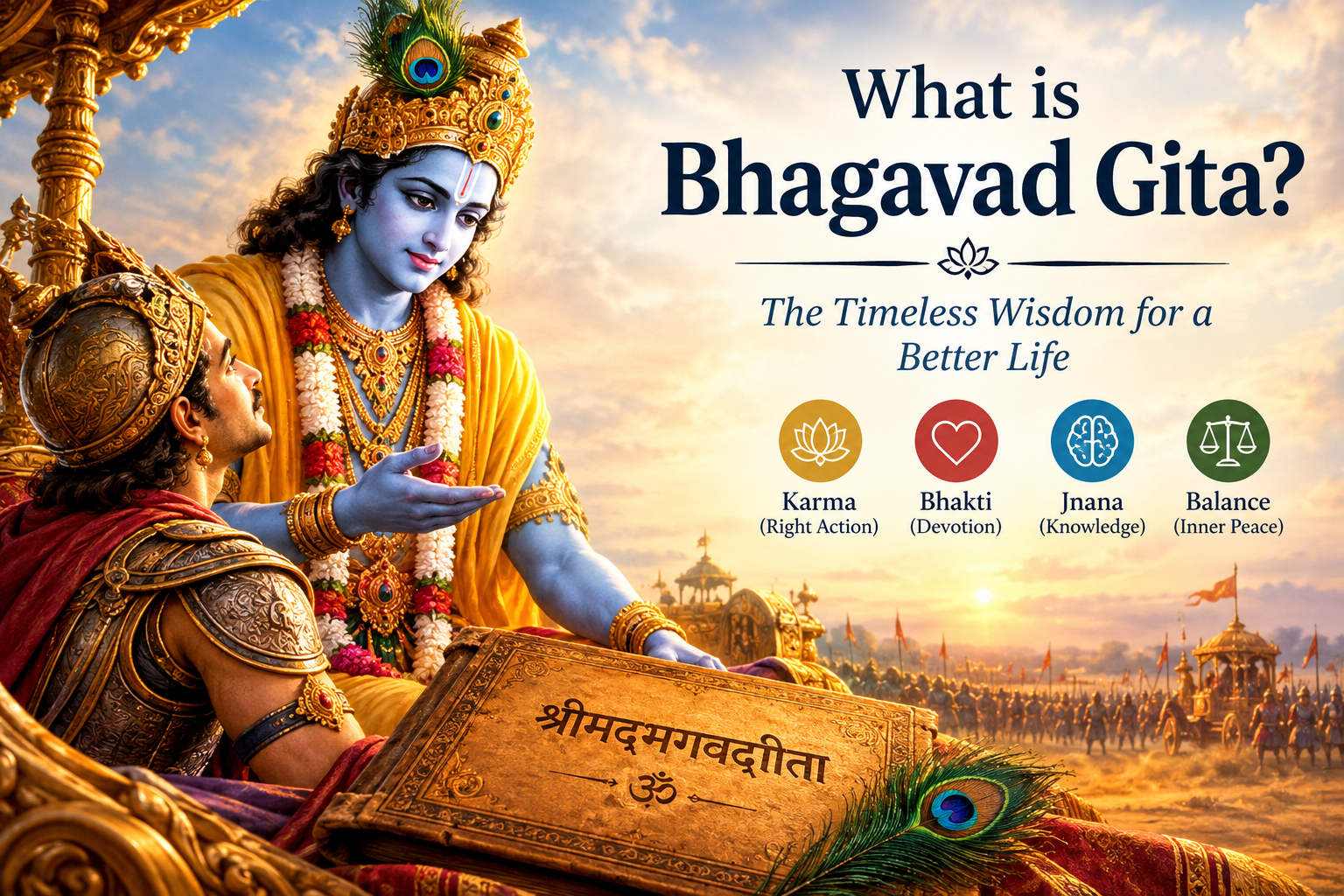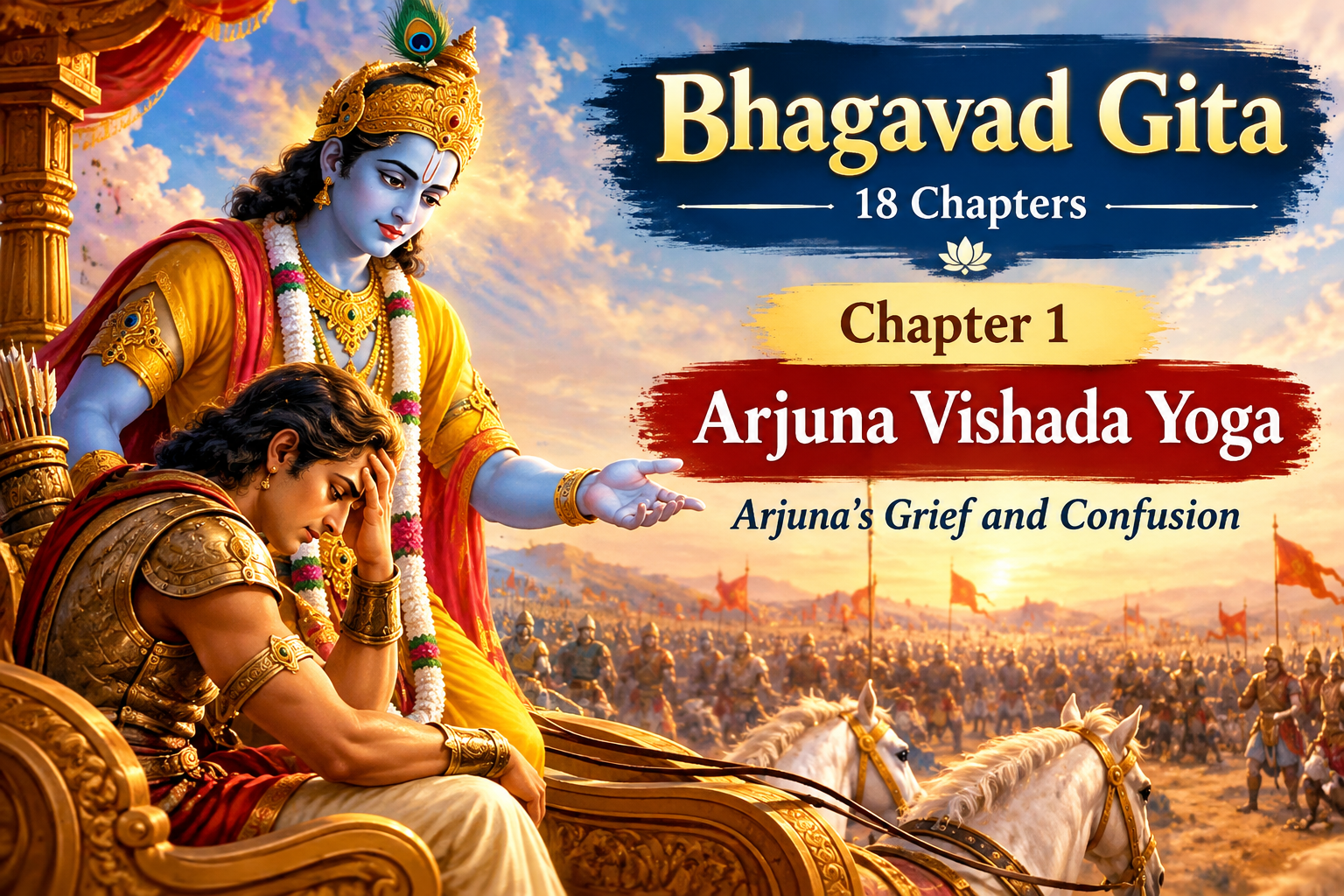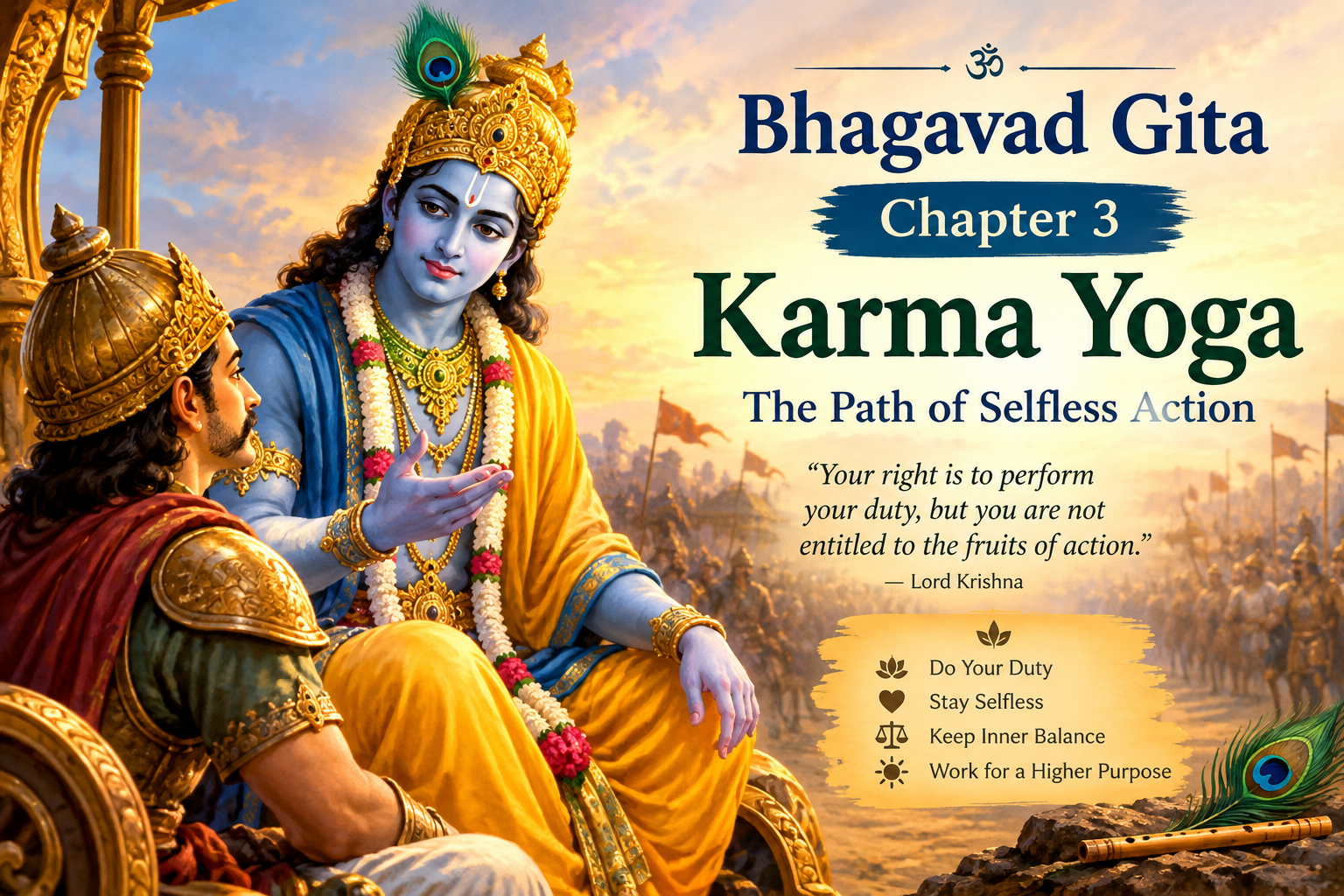
📖भगवद्गीताअध्याय :२ सांख्ययोग — आत्मज्ञान व कर्माचे तत्त्वज्ञान Sankhya Yoga: The Knowledge of the Self and the Philosophy of Karma
Sep 24, 2026 · 5 min read · 107 views

Introduction
Sankhya Yoga, the second chapter of the Bhagavad Gita, is one of the most important chapters of the sacred dialogue between Lord Krishna and Arjuna. It introduces profound teachings about the eternal nature of the soul, the importance of duty, self-knowledge, equanimity, and the path of righteous action.
After seeing his relatives, teachers, and loved ones standing on the battlefield of Kurukshetra, Arjuna becomes overwhelmed with sorrow and confusion. He loses the confidence to perform his duty as a warrior. At this moment, Lord Krishna begins guiding him toward a deeper understanding of life and the Self.
Why Is Sankhya Yoga Important?
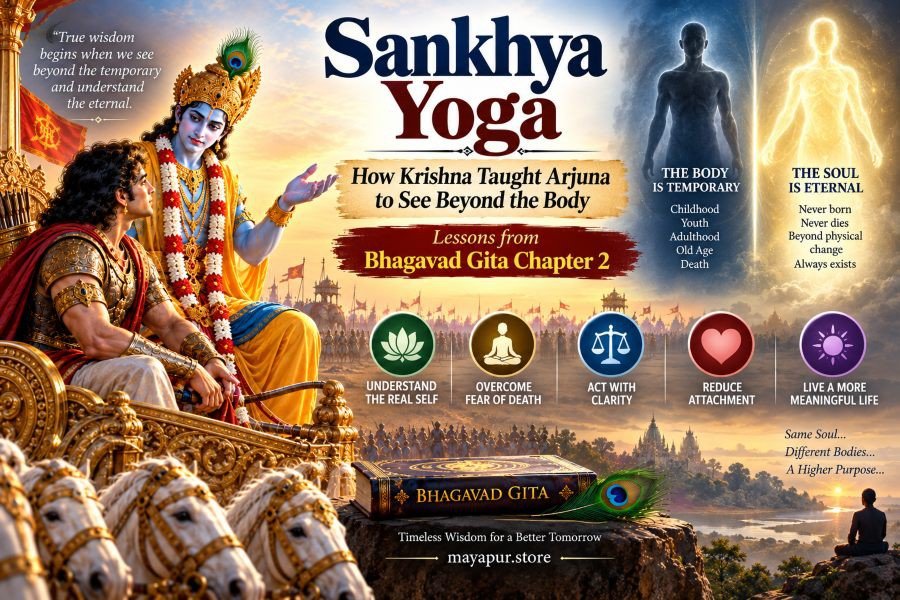
The second chapter establishes many of the fundamental teachings that Krishna explains throughout the Bhagavad Gita. It teaches that the physical body is temporary, while the Atman (Self) is eternal.
Krishna encourages Arjuna to understand the difference between the temporary body and the eternal soul. He also explains that a person should perform their rightful duty without becoming excessively attached to the results.
This teaching forms the foundation of Karma Yoga, the path of selfless action.
The Eternal Nature of the Soul
One of the central teachings of Sankhya Yoga is that the soul does not perish when the body dies.
According to Krishna, the Self is eternal and cannot be destroyed by physical forces. The body changes through childhood, youth, and old age, and eventually passes away, but the eternal Self remains beyond these changes.
This teaching helps Arjuna overcome his fear and sorrow. Krishna explains that understanding the eternal nature of the Self can lead a person toward wisdom and inner peace.
The Importance of Duty
Krishna reminds Arjuna that every person has responsibilities in life. Arjuna's duty is connected with his role as a warrior and his responsibility to uphold righteousness.
Krishna teaches that avoiding one's rightful duty because of fear, attachment, or emotional confusion is not the path of wisdom.
The lesson can also be understood in everyday life: people should sincerely perform their responsibilities while maintaining awareness and integrity.
Karma and the Right to Action
One of the most famous teachings of the Bhagavad Gita appears in this chapter:
“You have a right to perform your prescribed duty, but not to the fruits of your actions.”
This teaching does not mean that results are unimportant. Rather, it encourages people to focus on performing their actions sincerely instead of becoming consumed by anxiety about the outcome.
When a person concentrates on doing their best and accepts the result with balance, they can experience greater mental peace.
Equanimity in Success and Failure
Sankhya Yoga teaches the importance of equanimity, or maintaining balance in different situations.
Success and failure, happiness and sorrow, praise and criticism are natural parts of life. A wise person does not allow every external situation to disturb their inner stability.
Krishna therefore teaches Arjuna to perform his duty while remaining balanced toward success and failure.
What Is a Sthitaprajna?
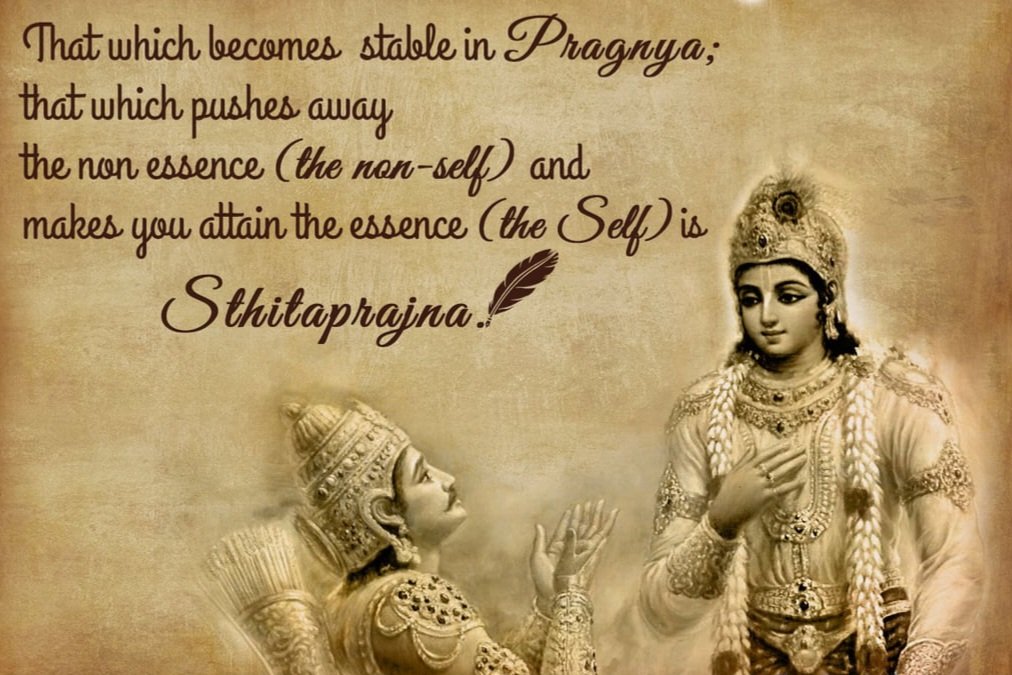
Towards the end of the chapter, Arjuna asks Krishna about the characteristics of a person who possesses steady wisdom.
Krishna describes such a person as one who is not controlled by excessive desires and whose mind remains peaceful and steady.
A person of steady wisdom:
- Controls the senses.
- Remains calm during difficulties.
- Does not become excessively attached to pleasure.
- Is not overwhelmed by fear, anger, or desire.
- Accepts both favorable and unfavorable circumstances with balance.
- Develops inner peace through self-control and wisdom.
Such a person is called Sthitaprajna, meaning one whose wisdom is firmly established.
The Path from Desire to Anger
Krishna also explains how uncontrolled desire can disturb the mind.
A person may repeatedly think about an object or experience, develop attachment toward it, and then develop desire. When the desire is obstructed, anger may arise. Anger can lead to confusion, and confusion can weaken one's ability to make wise decisions.
This teaching highlights the importance of controlling the mind and senses before desires become overwhelming.
The Message of Sankhya Yoga in Daily Life
The teachings of Sankhya Yoga are not limited to the battlefield of Kurukshetra. They can also be applied to modern life.
Students can focus on studying sincerely without becoming overwhelmed by examination results. Workers can perform their responsibilities honestly without constantly worrying about recognition. Parents can fulfil their responsibilities with love while accepting that they cannot control every outcome.
The central message is to perform one's duty sincerely, develop self-knowledge, control unnecessary desires, and maintain inner balance.
Conclusion
Sankhya Yoga, the second chapter of the Bhagavad Gita, provides a deep understanding of the Self, the temporary nature of the body, the importance of duty, and the philosophy of action without attachment to results.
Lord Krishna's teachings encourage Arjuna to move beyond confusion and emotional attachment and to act with wisdom, courage, and balance.
The chapter reminds us that while we cannot control every result in life, we can control the sincerity, discipline, and intention with which we perform our actions.
Key Message
Do your duty with sincerity, remain balanced in success and failure, and seek knowledge of the eternal Self.
---
Frequently Asked Questions (FAQ)
1. What is the second chapter of the Bhagavad Gita called?
The second chapter is called Sankhya Yoga.
2. What is the main message of Sankhya Yoga?
The chapter teaches about the eternal nature of the Self, the temporary nature of the body, the importance of duty, and maintaining equanimity while performing actions.
3. What does Krishna teach about the soul?
Krishna teaches that the true Self is eternal and cannot be destroyed by physical changes affecting the body.
4. What is Karma Yoga?
Karma Yoga is the path of performing one's duties sincerely without excessive attachment to the results of one's actions.
5. Who is a Sthitaprajna?
A Sthitaprajna is a person whose wisdom is firmly established and who remains calm and balanced despite changing circumstances.
#BhagavadGita #SankhyaYoga #GitaChapter2 #LordKrishna #KrishnaTeachings #KarmaYoga #SelfKnowledge #SpiritualWisdom #HinduDharma #SanatanDharma