
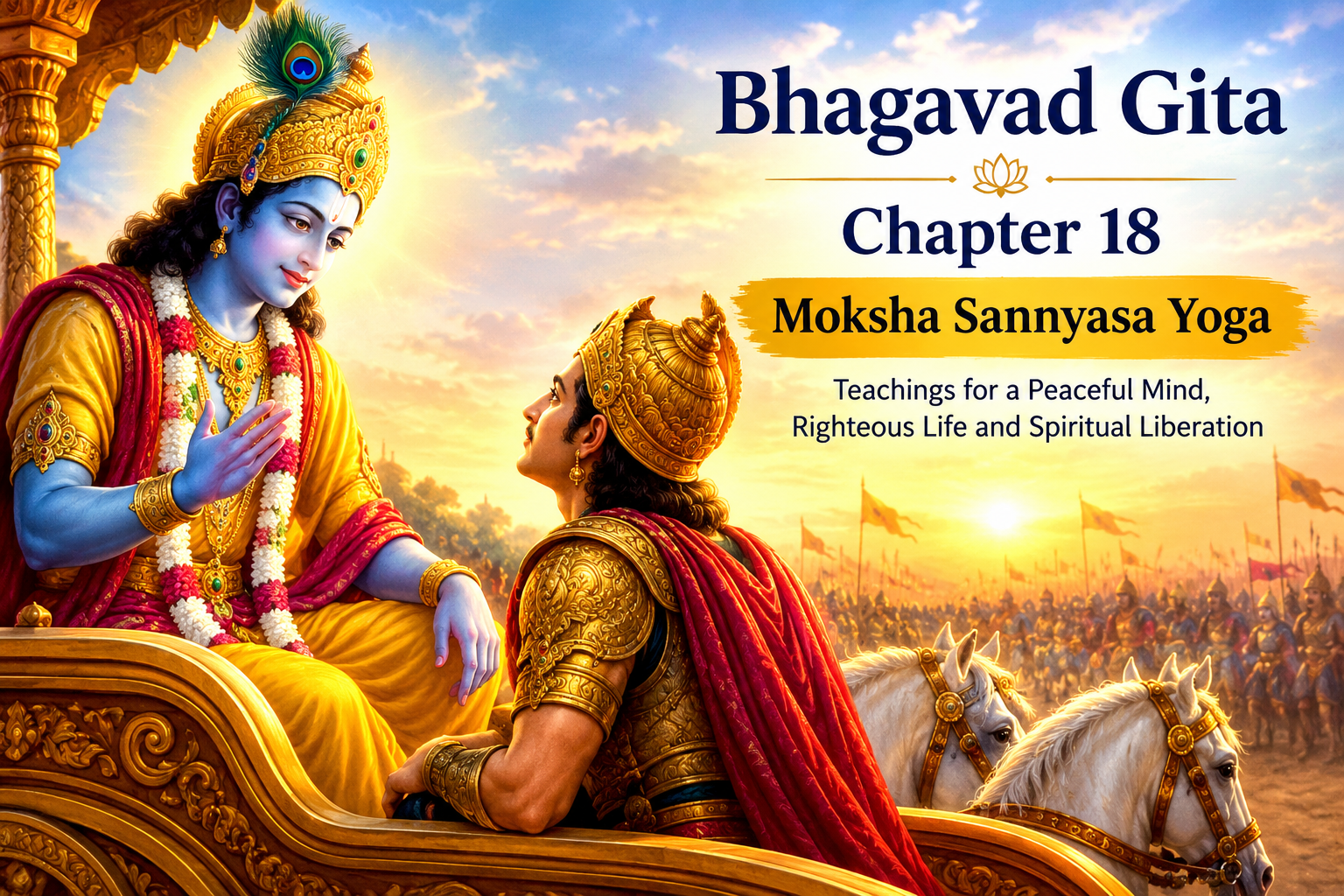
📖भगवद्गीता अध्याय १८ — मोक्षसंन्यासयोग(Moksha Sannyasa Yoga)
Oct 11, 2026 · 7 min read · 76 views
Introduction
The Bhagavad Gita is one of the most sacred and influential scriptures in Hinduism. It contains the divine teachings of Lord Krishna to Arjuna on the battlefield of Kurukshetra. The Bhagavad Gita consists of 18 chapters, each explaining important lessons about life, duty, devotion, wisdom, and spiritual growth.
The 18th chapter, known as Moksha Sannyasa Yoga, is the final chapter of the Bhagavad Gita. It summarizes many of Lord Krishna's teachings and explains the importance of selfless action, renunciation, faith, devotion, and liberation.
This chapter teaches us how to perform our duties sincerely, overcome confusion, and move towards spiritual freedom.
What Is Moksha Sannyasa Yoga?
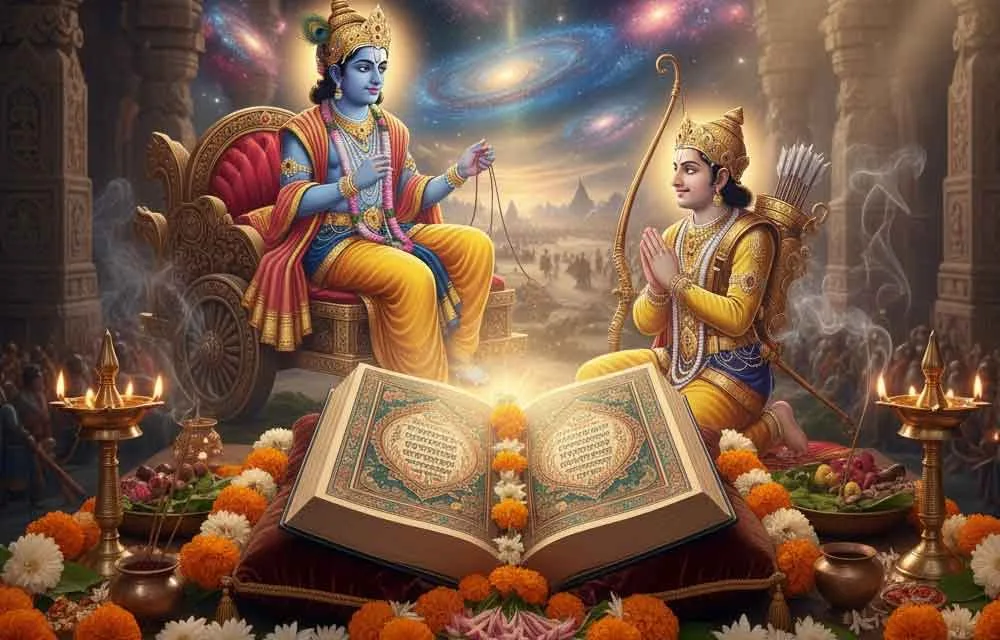
The Sanskrit title Moksha Sannyasa Yoga combines three important concepts:
- Moksha: Liberation from the cycle of birth and death.
- Sannyasa: Renunciation, especially giving up attachment to selfish desires.
- Yoga: The spiritual path that connects an individual with the Divine.
In this chapter, Lord Krishna explains that true renunciation does not necessarily mean abandoning family, work, or responsibilities. Instead, it means performing our duties without selfish attachment to their results.
A person can live a responsible life while developing inner peace, wisdom, and devotion.
1. The Difference Between Renunciation and Sacrifice
At the beginning of Chapter 18, Arjuna asks Lord Krishna about the meaning of renunciation and sacrifice.
Krishna explains that giving up actions motivated by selfish desires is different from abandoning one's essential duties. Certain responsibilities, such as acts of charity, worship, and spiritual discipline, should not simply be neglected.
The deeper message is that we should perform good actions with a pure heart rather than acting only for personal rewards.
For example, helping someone in need without expecting anything in return is a form of selfless action.
2. The Three Types of Action
According to the Bhagavad Gita, human actions and attitudes can be understood through the three gunas: Sattva, Rajas, and Tamas.
Sattvic Action: Actions performed with understanding, sincerity, and without selfish attachment.
Rajasic Action: Actions driven by personal desires, ambition, ego, or the expectation of rewards.
Tamasic Action: Actions performed through ignorance, carelessness, confusion, or without considering their consequences.
Lord Krishna encourages individuals to develop sattvic qualities because they support clarity, balance, and spiritual understanding.
3. The Importance of Duty

One of the central teachings of Chapter 18 is the importance of performing one's own duty, known as Swadharma.
Every person has responsibilities in life, whether towards family, society, work, or personal development. The Bhagavad Gita encourages people to approach their responsibilities with sincerity and dedication.
Rather than constantly comparing ourselves with others, we should focus on fulfilling our own duties in an ethical and responsible way.
When we perform our work honestly and without unnecessary attachment to success or failure, we develop discipline and inner strength.
4. Knowledge, Action, and the Three Gunas
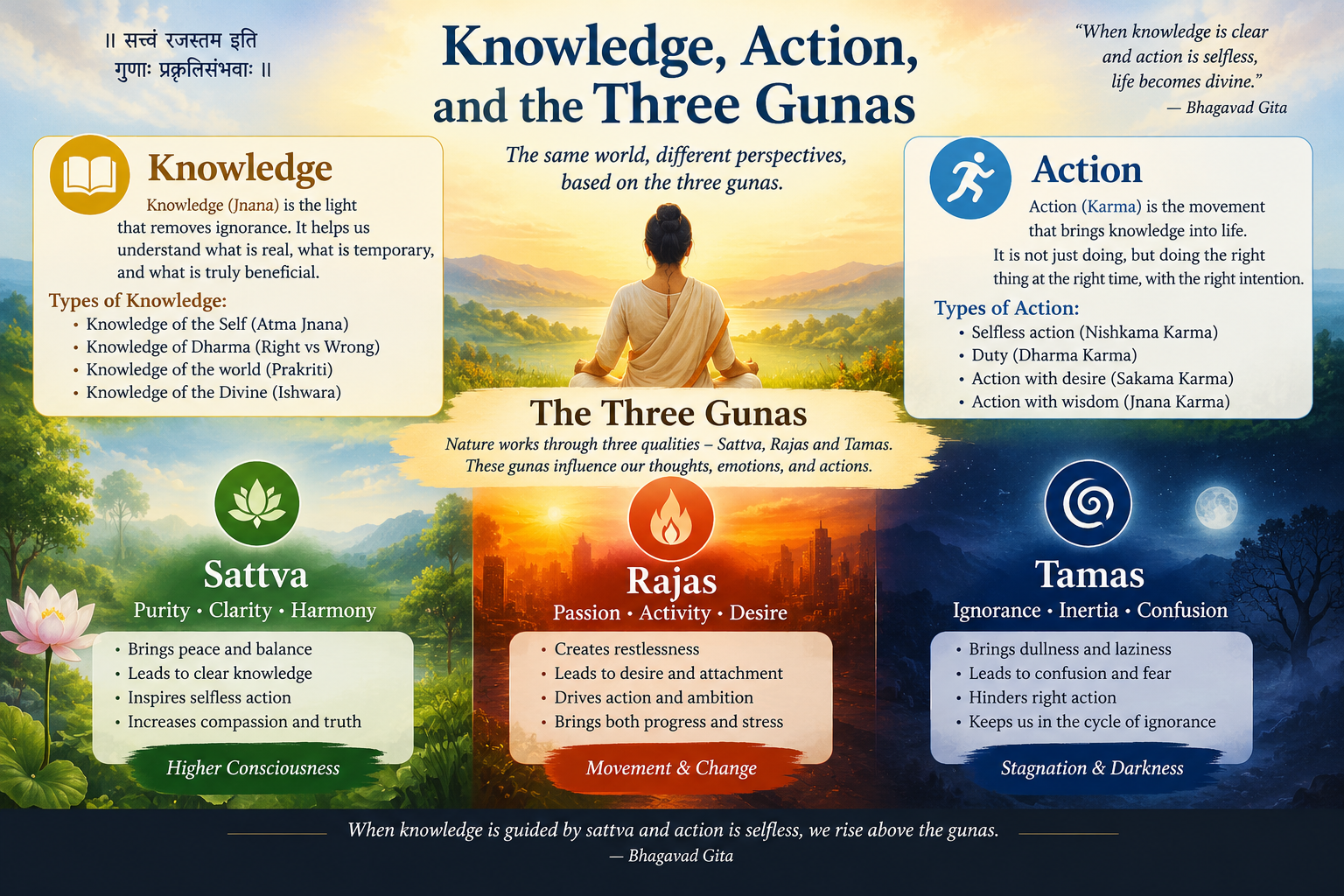
Lord Krishna explains that knowledge, action, understanding, determination, and happiness can all be influenced by the three gunas.
Sattva represents clarity and wisdom. Rajas is associated with desire and restless activity. Tamas is connected with ignorance and confusion.
These qualities help us reflect on our own behavior.
For example, when we make decisions calmly and consider what is right for everyone involved, we demonstrate greater clarity. When we act only because of anger, jealousy, or greed, our judgment may become clouded.
The purpose of this teaching is to help us recognize our tendencies and cultivate wisdom, balance, and self-control.
5. Faith and Devotion to God
Devotion is another important teaching of Chapter 18. Lord Krishna explains that spiritual growth involves sincerity, trust, and dedication to the Divine.
Devotion does not have to be limited to rituals. It can also be expressed through kindness, honesty, gratitude, patience, and service to others.
When people remember God during difficult times, they may find courage and hope. Faith can encourage them to face challenges with a calmer mind and a stronger sense of purpose.
The chapter reminds us that spiritual life involves both inner understanding and the way we treat others.
6. The Famous Verse of Surrender – Bhagavad Gita 18.66
One of the most well-known verses in the Bhagavad Gita appears in Chapter 18.
Sanskrit Verse:
Sarva-dharman parityajya
Mam ekam sharanam vraja
Aham tvam sarva-papebhyo
Mokshayishyami ma shuchah
Meaning in English:
“Abandon all varieties of duties and surrender unto Me alone. I shall deliver you from all sinful reactions. Do not fear.”
This verse expresses Lord Krishna's teaching about complete surrender to the Divine. In the devotional context of the Gita, surrender means placing one's trust in God while seeking spiritual guidance and freedom from fear.
It does not encourage careless behavior or the neglect of responsibilities. Rather, it teaches devotees to act sincerely, let go of excessive ego, and trust in God's guidance.
7. How to Apply Chapter 18 in Daily Life
The teachings of Moksha Sannyasa Yoga can be applied in everyday situations.
Perform your duties sincerely: Give your best effort at work and in family life without becoming completely dependent on the outcome.
Avoid unnecessary attachment: Celebrate success with gratitude and learn from failure without losing hope.
Control your ego: Listen to others, accept your mistakes, and remain open to learning.
Choose ethical actions: Think about the consequences of your decisions and try to act with honesty and compassion.
Develop devotion: Spend time in prayer, meditation, or the study of sacred scriptures according to your beliefs.
Maintain inner balance: Difficult situations are a part of life. Try to respond with patience and understanding rather than anger or fear.
These practices can help develop a more peaceful, responsible, and meaningful life.
8. The Final Message of the Bhagavad Gita
At the end of the Bhagavad Gita, Arjuna gains a clearer understanding of his duty after listening to Lord Krishna's teachings. His confusion begins to give way to determination.
The dialogue between Krishna and Arjuna reminds us that wisdom can help us face difficult decisions. Spiritual guidance does not remove every challenge from life, but it can help us approach challenges with greater courage and clarity.
Chapter 18 brings together the major teachings of the Gita: selfless action, knowledge, devotion, discipline, and surrender to God.
Its message is relevant to people who wish to live with purpose, fulfill their responsibilities, and develop a deeper spiritual understanding.
Conclusion
Bhagavad Gita Chapter 18, Moksha Sannyasa Yoga, is the concluding chapter of this timeless spiritual scripture. It teaches that liberation is connected with wisdom, devotion, sincere action, and freedom from selfish attachment.
Lord Krishna encourages Arjuna to understand his responsibilities, act with faith, and surrender to the Divine.
The chapter reminds us that spiritual growth is not simply about leaving the world behind. It is also about transforming the way we live in the world—with honesty, compassion, dedication, and inner peace.
By reflecting on these teachings and applying them in daily life, we can develop a stronger sense of purpose and move towards a more balanced and spiritually meaningful life.
Frequently Asked Questions (FAQs)
1. What is Bhagavad Gita Chapter 18 called?
Chapter 18 is called Moksha Sannyasa Yoga, which discusses liberation, renunciation, duty, and spiritual wisdom.
2. How many verses are there in Chapter 18?
Bhagavad Gita Chapter 18 contains 78 verses.
3. What is the main teaching of Moksha Sannyasa Yoga?
Its main teaching is to perform one's duties sincerely, give up selfish attachment to results, cultivate wisdom, and develop devotion to God.
4. What is the most famous verse in Chapter 18?
Bhagavad Gita 18.66 is among its most famous verses. It teaches surrender to Lord Krishna and freedom from fear through divine grace.
5. Can the teachings of Chapter 18 be applied in modern life?
Yes. Its teachings can help people approach work, relationships, responsibilities, and difficult decisions with greater sincerity, balance, and spiritual awareness.
6. What does Moksha mean in Hinduism?
Moksha means spiritual liberation from the cycle of birth and death. It is an important goal in many Hindu philosophical and spiritual traditions.
Final Thoughts
The Bhagavad Gita teaches us to do what is right, remain humble, and place our trust in the Divine. The message of Chapter 18 inspires us to live with courage, responsibility, wisdom, and devotion.
May the divine teachings of Lord Krishna guide everyone towards peace, truth, and spiritual growth.
Jai Shri Krishna! 🙏
More in Bhagavad Gita
What is Bhagavad Gita? – The Complete Guide to Bhagavad Gita
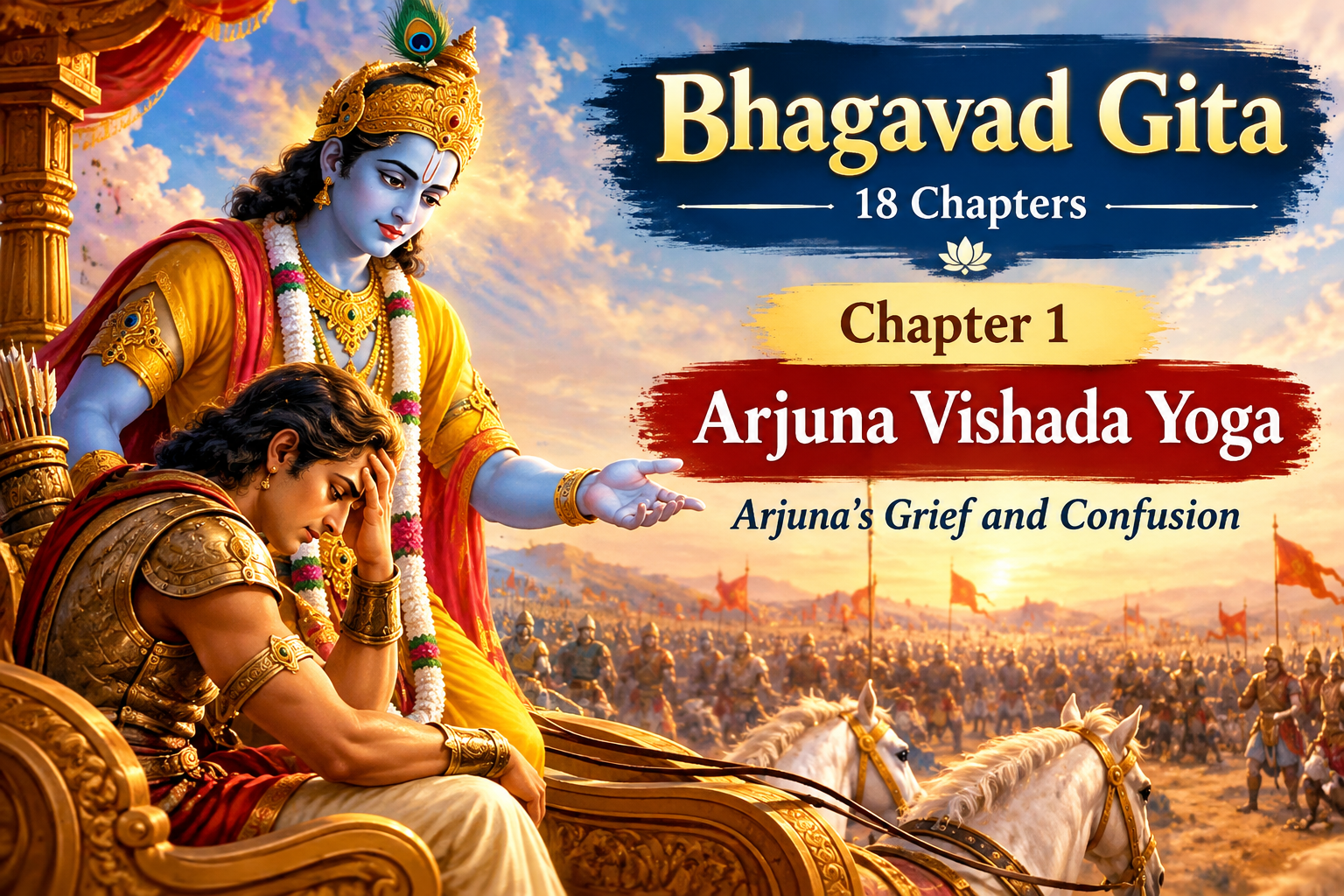
📖 भगवद्गीताअध्याय: १ — अर्जुनविषादयोग (Arjuna Vishada Yoga)
