
📖भगवद्गीता अध्याय :६ – आत्मसंयमयोग / ध्यानयोग (Dhyana Yoga)
Sep 28, 2026 · 7 min read · 104 views
Introduction
The Bhagavad Gita is one of the most sacred and influential spiritual texts in Hinduism. It contains the timeless teachings of Lord Krishna to Arjuna on life, duty, devotion, wisdom, and spiritual growth.
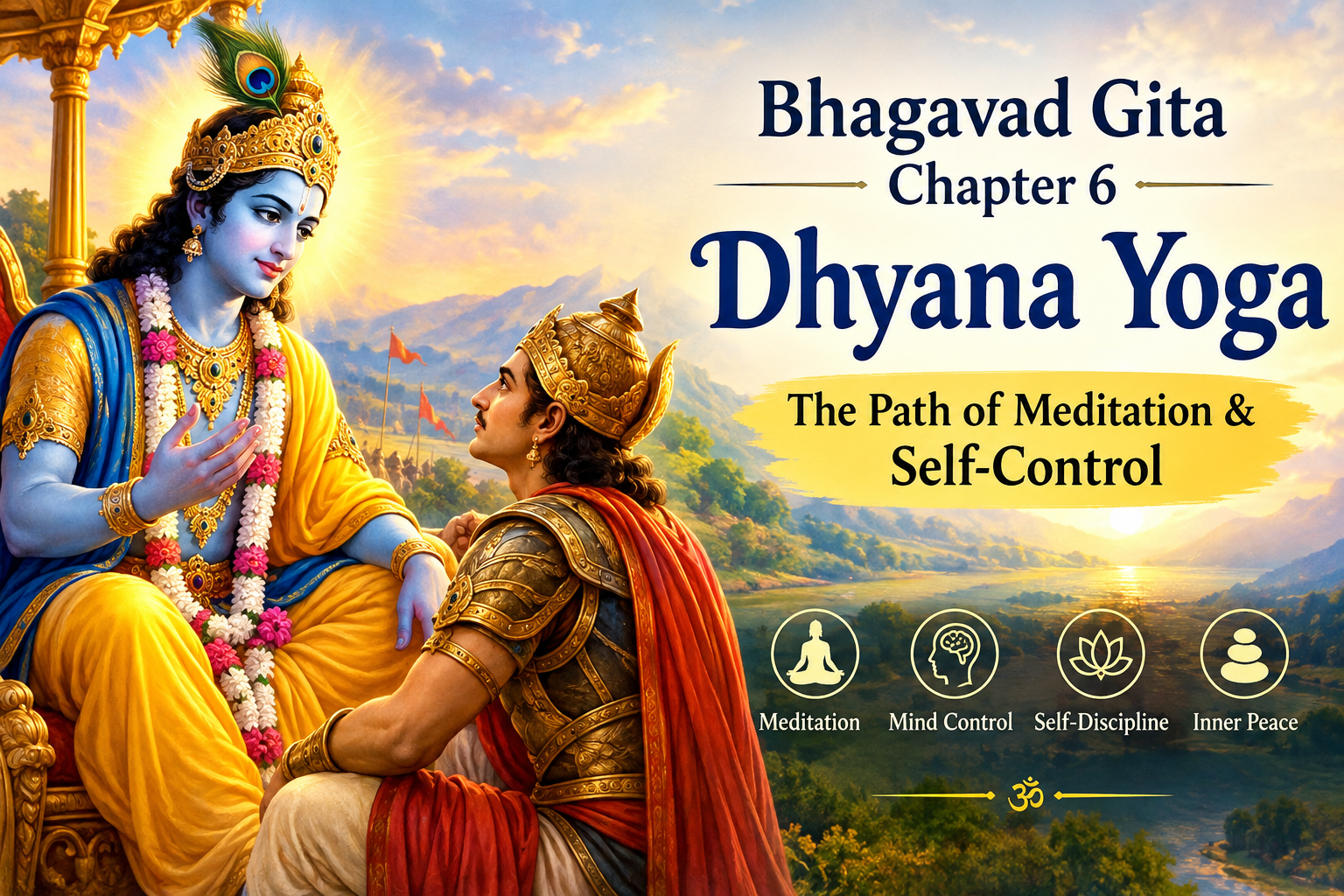
Chapter 6 of the Bhagavad Gita is known as Dhyana Yoga or Atma Samyama Yoga, which means the Yoga of Meditation and Self-Control. In this chapter, Lord Krishna explains how a person can control the mind, practise meditation, develop discipline, and achieve inner peace.
The teachings of this chapter are valuable for anyone who wishes to reduce mental distractions, improve concentration, and live a balanced spiritual life.
What Is Dhyana Yoga?
Dhyana Yoga is the practice of meditation and focusing the mind on the inner self and the Divine. It teaches us to move beyond unnecessary thoughts and distractions and develop a calm, balanced state of mind.
According to Lord Krishna, true yoga is not simply about physical exercises. It is also about mastering our thoughts, emotions, desires, and actions.
Through regular meditation, self-discipline, and a balanced lifestyle, a person can gradually develop mental stability and spiritual awareness.
1. Self-Control Is the Foundation of Spiritual Growth
Lord Krishna explains that a person should learn to discipline the mind rather than become controlled by it.
Our mind can be our greatest friend or our greatest enemy. When we guide our thoughts wisely, the mind helps us make good decisions. When we allow negative thoughts, anger, jealousy, and uncontrolled desires to dominate us, the mind can disturb our peace.
Self-control does not mean suppressing every emotion. It means understanding our thoughts and responding to situations with patience and wisdom.
Practical lesson: Before reacting in anger or fear, pause for a moment, breathe slowly, and think carefully.
2. The Mind Can Be Our Friend or Enemy
One of the important teachings of Chapter 6 is that we must train our own minds.
A disciplined mind supports confidence, patience, and clarity. An uncontrolled mind can create unnecessary worry and confusion.
Lord Krishna teaches that people should gradually develop mastery over their thoughts through consistent effort.
We may not be able to stop every thought from appearing, but we can learn not to follow every thought that comes into our mind.
Practical lesson: Spend a few minutes each day observing your thoughts without judging yourself.
3. The Right Way to Practise Meditation
In Chapter 6, Lord Krishna describes the importance of choosing a clean and peaceful place for meditation. A person should sit comfortably, keep the body steady, and focus the mind.
Meditation requires patience. Beginners do not need to meditate for long periods. Even five to ten minutes of regular practice can help establish a routine.
Simple Steps for Meditation
1. Find a clean and quiet place.
2. Sit comfortably with your back naturally upright.
3. Close your eyes gently or keep your gaze lowered.
4. Breathe naturally and pay attention to your breathing.
5. When the mind wanders, gently bring your attention back.
6. Practise regularly without expecting immediate results.
The purpose is not to force the mind to become completely empty. It is to develop awareness, concentration, and calmness.
4. Balance Is Essential in Yoga
Lord Krishna teaches that yoga is not suitable for someone who eats too much or eats too little, sleeps excessively or neglects sleep.
A balanced lifestyle supports meditation and spiritual discipline.
This teaching reminds us that spiritual growth does not require neglecting our physical needs or everyday responsibilities.
A healthy routine includes balanced meals, sufficient sleep, regular activity, time for reflection, and responsible action.
Practical lesson: Maintain a realistic daily routine that gives time to your family, work, health, and spiritual practice.
5. How to Control a Restless Mind
Arjuna tells Lord Krishna that controlling the mind is extremely difficult because it is restless, powerful, and constantly changing.
Lord Krishna acknowledges this difficulty. He explains that the mind can be trained through abhyasa (consistent practice) and vairagya (non-attachment).
Abhyasa means returning to the practice again and again. Vairagya means learning not to become excessively attached to every desire, thought, or outcome.
For example, during meditation, your mind may wander toward work, family matters, or future worries. Instead of becoming frustrated, gently return your attention to your breath or chosen point of focus.
Progress comes through patience and regular practice, not through self-criticism.
6. What Happens When Meditation Becomes a Habit?
Regular meditation can help a person become more aware of their thoughts and emotional reactions. It may also support relaxation and concentration.
The spiritual goal of Dhyana Yoga is deeper than temporary relaxation. It involves developing inner steadiness and a clearer understanding of the self.
As a person becomes more disciplined, they may learn to respond thoughtfully rather than react impulsively.
Meditation is a gradual journey. Each day offers another opportunity to practise patience, awareness, and self-control.
7. Lord Krishna's Teaching on the Spiritual Seeker
Chapter 6 also discusses the person who begins the spiritual path but struggles to complete it.
Arjuna asks what happens to someone who develops faith in yoga but cannot attain perfection before death.
Lord Krishna reassures him that sincere spiritual effort is not wasted. He explains that the spiritual progress of such a person is not simply lost and describes the continuation of spiritual development across lifetimes, according to the Gita's teachings.
This message encourages us not to give up when progress feels slow.
Every sincere effort toward wisdom, self-discipline, and spiritual growth has value.
8. The Importance of Yoga in Everyday Life
The teachings of Dhyana Yoga can be applied to modern life in simple ways.
- At home: Respond to family members with patience and understanding.
- At work: Focus on one task at a time instead of allowing distractions to dominate.
- During difficult situations: Pause before making decisions.
- In spiritual practice: Set aside a few minutes for meditation, prayer, or reflection.
- In daily habits: Maintain a balanced routine and avoid excessive attachment to outcomes.
Yoga is not limited to a meditation mat. It is also reflected in how we think, speak, act, and respond to the world.
9. The Highest Yogi According to the Bhagavad Gita
At the end of Chapter 6, Lord Krishna explains the importance of faith and devotion.
He describes the yogi who worships Him with faith and whose mind is deeply united with Him as especially connected to Him.
This teaching shows that meditation, self-discipline, and devotion can work together on the spiritual path.
For devotees, remembering God with sincerity can become a source of strength, peace, and direction in daily life.
Important Teachings of Bhagavad Gita Chapter 6
The central lessons of Dhyana Yoga include:
1. Train the mind through regular practice.
2. Develop self-control and avoid uncontrolled desires.
3. Practise meditation with patience.
4. Maintain balance in food, sleep, and daily activities.
5. Do not become discouraged when the mind wanders.
6. Avoid excessive attachment to results.
7. Continue spiritual practice with faith and sincerity.
8. Combine meditation, wise action, and devotion.
Frequently Asked Questions (FAQs)
1. What is the name of Chapter 6 of the Bhagavad Gita?
Chapter 6 is called Dhyana Yoga, also known as Atma Samyama Yoga. It focuses on meditation, self-control, and discipline of the mind.
2. What is the main message of Dhyana Yoga?
Its main message is that the mind can be trained through consistent practice, non-attachment, meditation, and a balanced lifestyle.
3. How does Lord Krishna explain mind control?
Lord Krishna explains that the restless mind can be controlled through abhyasa, or regular practice, and vairagya, or non-attachment.
4. How long should a beginner meditate?
A beginner may start with five to ten minutes a day and gradually increase the duration according to comfort and consistency.
5. Can the teachings of Dhyana Yoga help in daily life?
Yes. The teachings encourage patience, concentration, emotional awareness, balanced habits, and thoughtful responses to everyday challenges.
6. What is the spiritual goal of Dhyana Yoga?
Its spiritual goal is to develop inner steadiness, self-realisation, and a deeper connection with the Divine.
Conclusion
Bhagavad Gita Chapter 6 teaches us that mastering the mind is a gradual process that requires patience, discipline, and faith. Through meditation, balanced living, and consistent practice, we can learn to respond to life's challenges with greater awareness.
Lord Krishna's message reminds us that we should not become discouraged when our minds wander or our spiritual progress seems slow. What matters is our sincere effort to continue the journey.
Control the mind, balance your life, and keep your faith alive. This is the timeless wisdom of Dhyana Yoga.
May the teachings of Lord Krishna guide us toward peace, wisdom, and spiritual growth.
Jai Shri Krishna! 🙏
More in Bhagavad Gita
What is Bhagavad Gita? – The Complete Guide to Bhagavad Gita

📖 भगवद्गीताअध्याय: १ — अर्जुनविषादयोग (Arjuna Vishada Yoga)
