
📖भगवद्गीताअध्याय: ५ — कर्मसंन्यासयोग(Karma Sannyasa Yoga – Renunciation of Action and the Path of Karma Yoga)
Sep 27, 2026 · 5 min read · 108 views
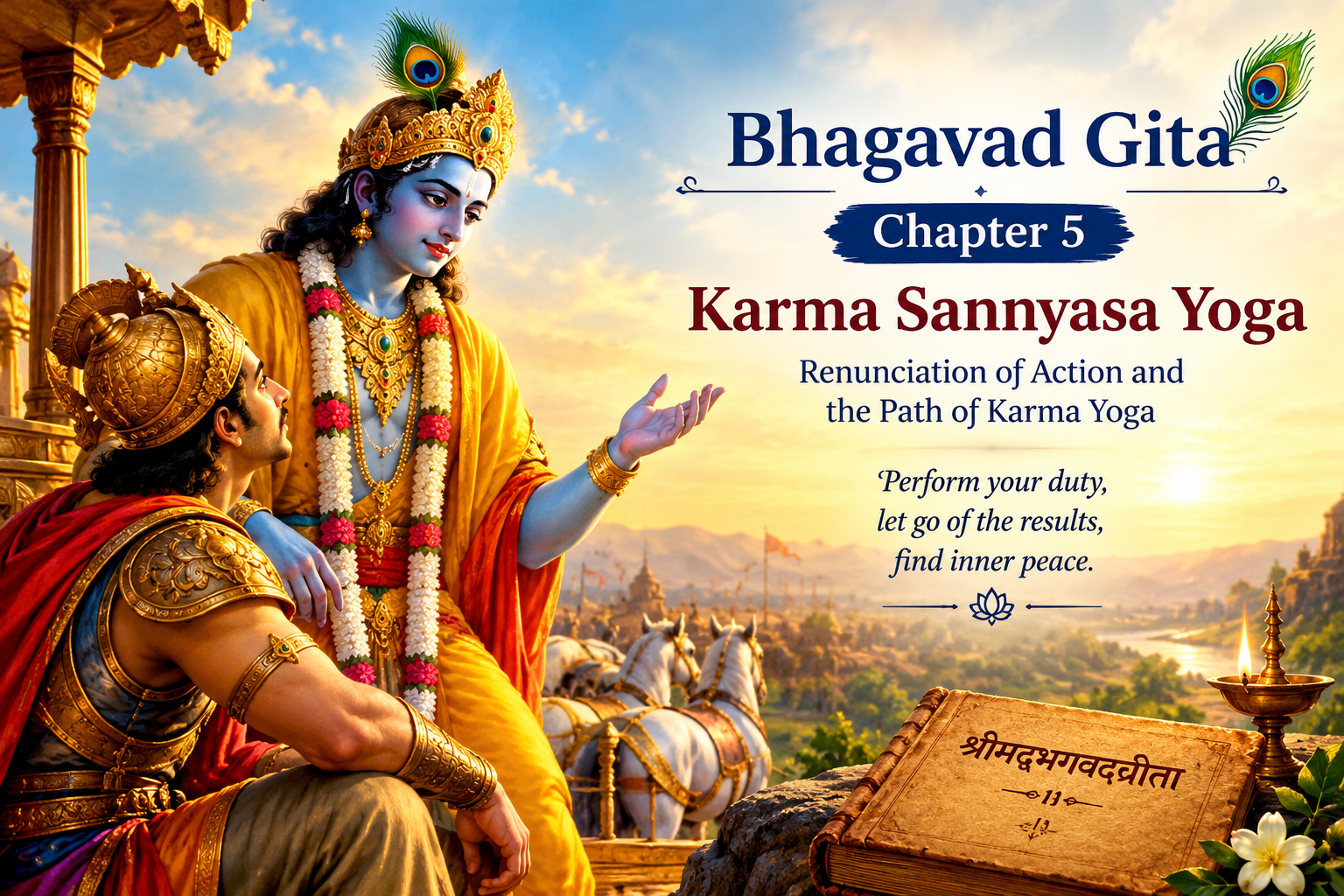
Karma Sannyasa Yoga, the fifth chapter of the Bhagavad Gita, explains the relationship between renunciation of action (Karma Sannyasa) and selfless action (Karma Yoga). Lord Krishna teaches Arjuna that spiritual liberation does not necessarily require giving up worldly responsibilities. Instead, a person can attain inner peace by performing duties without attachment to their results.
What is Karma Sannyasa Yoga?
The word Karma means action or duty, while Sannyasa means renunciation or letting go. Karma Sannyasa Yoga teaches us how to perform our responsibilities while remaining detached from selfish desires.
Lord Krishna explains that both Karma Sannyasa and Karma Yoga can lead a person toward spiritual realization. However, for a person living an active worldly life, performing duties selflessly is often a practical path toward inner purification.
Karma Sannyasa and Karma Yoga
There is an important difference between these two paths.
Karma Sannyasa means giving up attachment to worldly actions and desires. It does not simply mean abandoning one's family, work, or responsibilities.
Karma Yoga means performing one's duties sincerely while giving up attachment to the fruits of those actions.
For example, a person may work hard, take care of the family, help others and perform daily responsibilities, but should not allow success or failure to completely control the mind.
The Importance of Selfless Action
According to Lord Krishna, actions themselves are not the main cause of bondage. Attachment to the results of actions creates bondage.
When a person performs an action only for personal gain, expectations and disappointment may arise. But when the same action is performed as a duty and offered to God, the mind gradually becomes peaceful.
This is the essence of Karma Yoga.
Renunciation Does Not Mean Running Away From Responsibilities
One of the important teachings of Karma Sannyasa Yoga is that true renunciation is an inner state of mind.
A person does not become a true renunciate simply by leaving worldly life. Real renunciation means giving up ego, selfish desires and attachment.
A person living with family and performing everyday duties can also follow the path of renunciation by remaining detached from the fruits of actions.
How Karma Yoga Brings Inner Peace
Karma Yoga helps a person develop balance in life.
When we stop constantly worrying about the result and focus on performing our duty sincerely, the mind becomes less disturbed by success and failure.
This does not mean that we should stop having goals. Rather, we should make sincere efforts while accepting that the final result may not always be under our control.
Such an attitude develops patience, stability and inner peace.
The Wise Person and Equality
Lord Krishna describes the wise person as one who sees the same divine reality in all beings.
Such a person does not allow differences of appearance, status or external circumstances to create hatred or excessive attachment.
This vision encourages compassion, humility and respect for all living beings.
Controlling the Mind and Senses
Karma Yoga is closely connected with control of the mind and senses.
The mind can easily become attached to pleasure, success, praise and material possessions. When desires continuously increase, peace becomes difficult to maintain.
Therefore, Krishna teaches the importance of controlling desires and directing the mind toward spiritual understanding.
A person who learns to remain calm amid changing circumstances gradually develops true freedom.
Work Without Attachment
The teaching of Karma Sannyasa Yoga can be applied to everyday life.
Whether we are working in an office, running a business, managing a household, studying, raising children or helping society, every responsibility can become a form of Karma Yoga.
The important thing is the attitude behind the action.
Do your duty sincerely. Give your best effort. Avoid excessive attachment to the result. Accept success with humility and failure with learning.
The Path to Spiritual Freedom
According to the Bhagavad Gita, freedom is not merely freedom from external responsibilities. It is freedom from the attachment, ego and desires that bind the mind.
When actions are performed without selfish attachment, they gradually purify the mind. A purified mind becomes capable of understanding the true nature of the Self.
Thus, Karma Yoga becomes not only a way of living but also a spiritual discipline.
Lessons from Karma Sannyasa Yoga for Modern Life
The teachings of Chapter 5 remain meaningful in today's busy world.
Some practical lessons are:
- Perform your responsibilities sincerely.
- Do not become excessively attached to results.
- Accept success and failure with balance.
- Control unnecessary desires.
- Avoid ego and selfishness.
- Treat people with equality and compassion.
- Keep your mind focused and peaceful.
- Consider your work an opportunity for self-development.
- Dedicate your actions to a higher purpose.
Conclusion
Karma Sannyasa Yoga teaches that true renunciation is not simply abandoning worldly life. It is the renunciation of ego, selfish desires and attachment to the fruits of action.
Lord Krishna shows that Karma Yoga and Karma Sannyasa ultimately lead toward spiritual realization, when practiced with wisdom and sincerity.
The central message of this chapter is simple: perform your duty, give your best effort, surrender the results and remain peaceful within.
When a person learns to act without selfish attachment, everyday life itself can become a path toward spiritual growth and liberation.
Frequently Asked Questions (FAQ)
1. What is Karma Sannyasa Yoga?
Karma Sannyasa Yoga is the fifth chapter of the Bhagavad Gita. It explains renunciation, selfless action and the relationship between Karma Sannyasa and Karma Yoga.
2. What is Karma Yoga?
Karma Yoga is the path of performing one's duties sincerely without being excessively attached to the results.
3. Does Sannyasa mean leaving family life?
Not necessarily. The Bhagavad Gita presents renunciation primarily as freedom from attachment, ego and selfish desires.
4. What is the main teaching of Chapter 5 of the Bhagavad Gita?
The chapter teaches that selfless action, inner renunciation and spiritual knowledge can lead a person toward peace and liberation.
5. How can Karma Yoga be practiced in daily life?
By performing responsibilities sincerely, helping others, controlling selfish desires and accepting success and failure with mental balance.
More in Bhagavad Gita
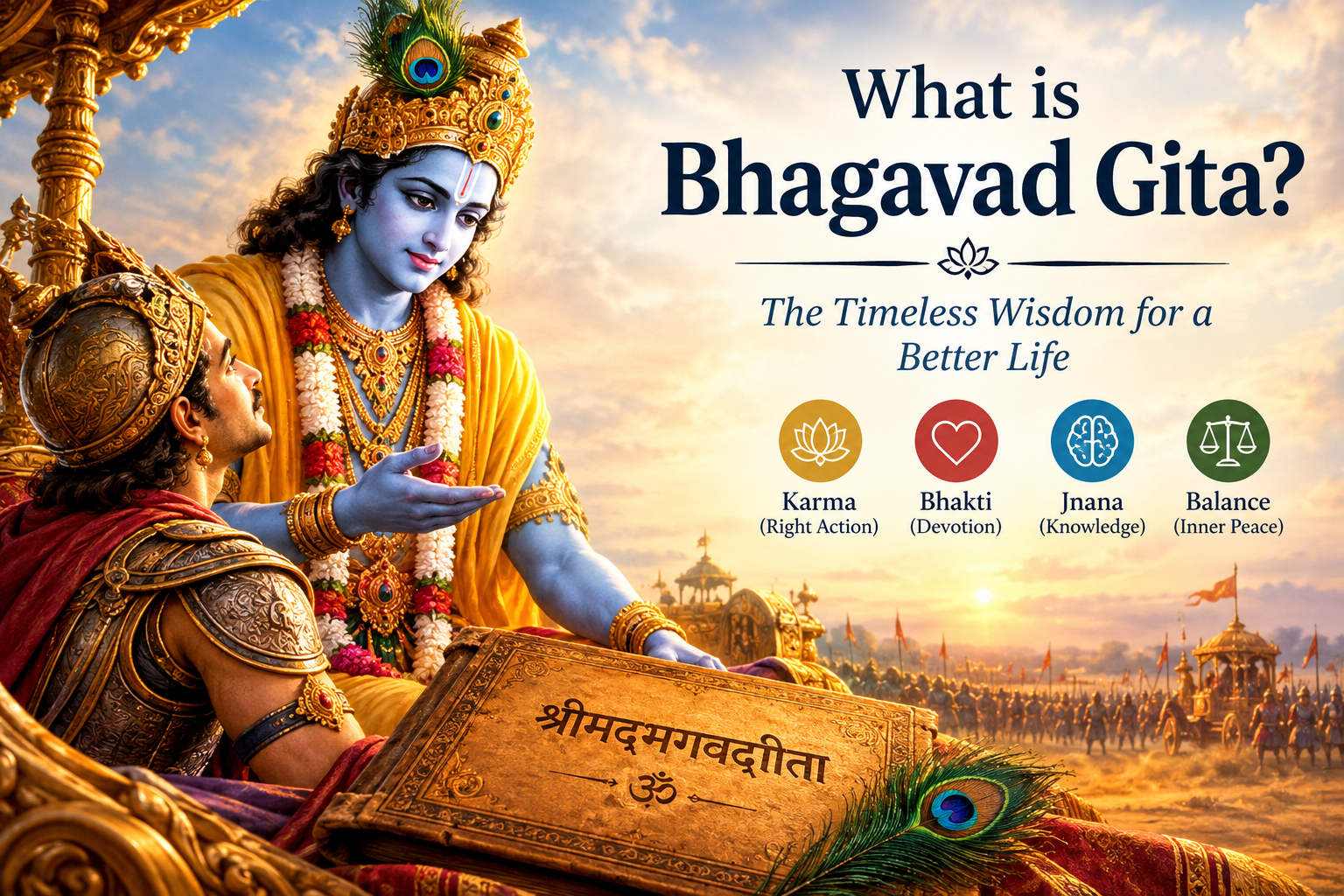
What is Bhagavad Gita? – The Complete Guide to Bhagavad Gita
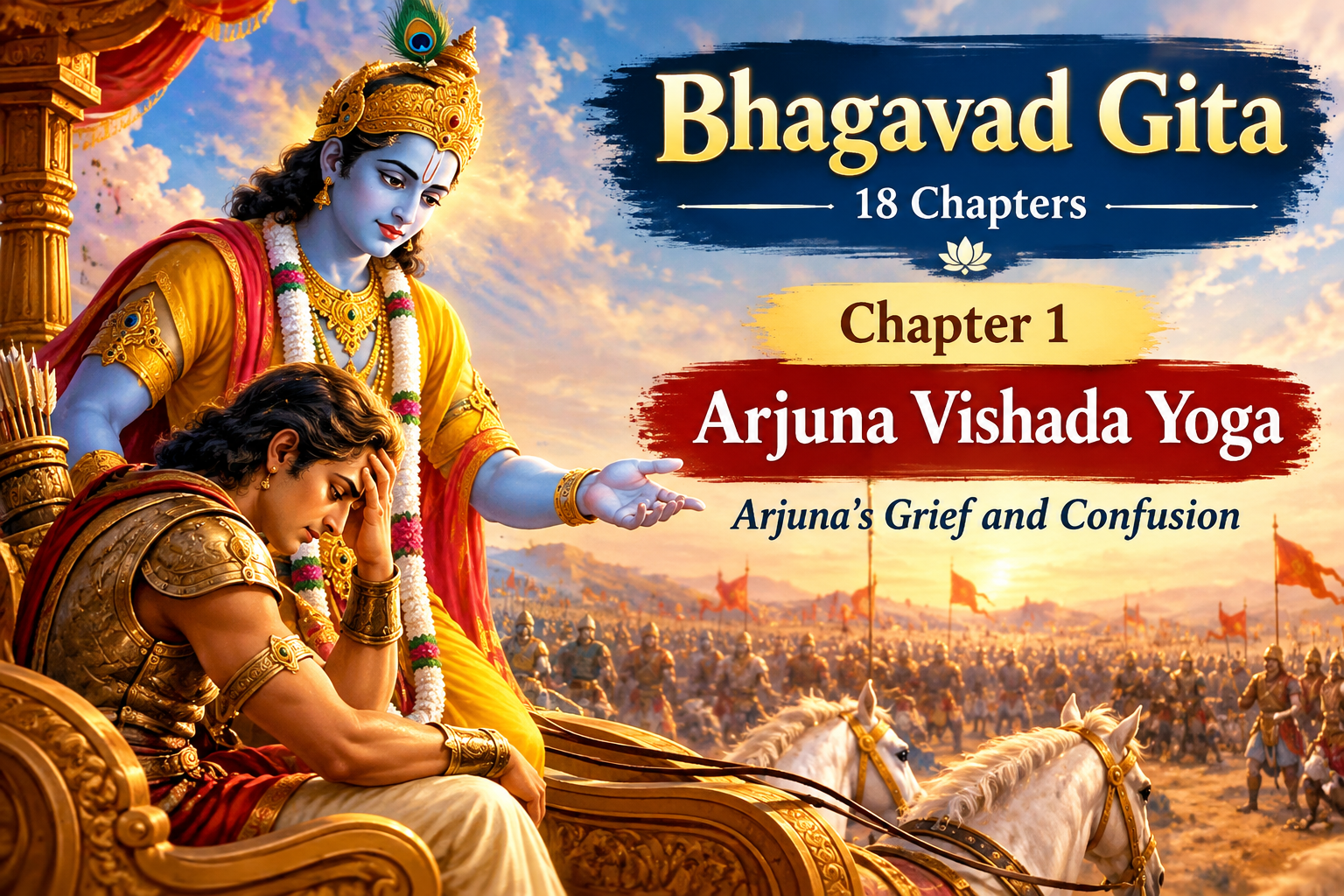
📖 भगवद्गीताअध्याय: १ — अर्जुनविषादयोग (Arjuna Vishada Yoga)
